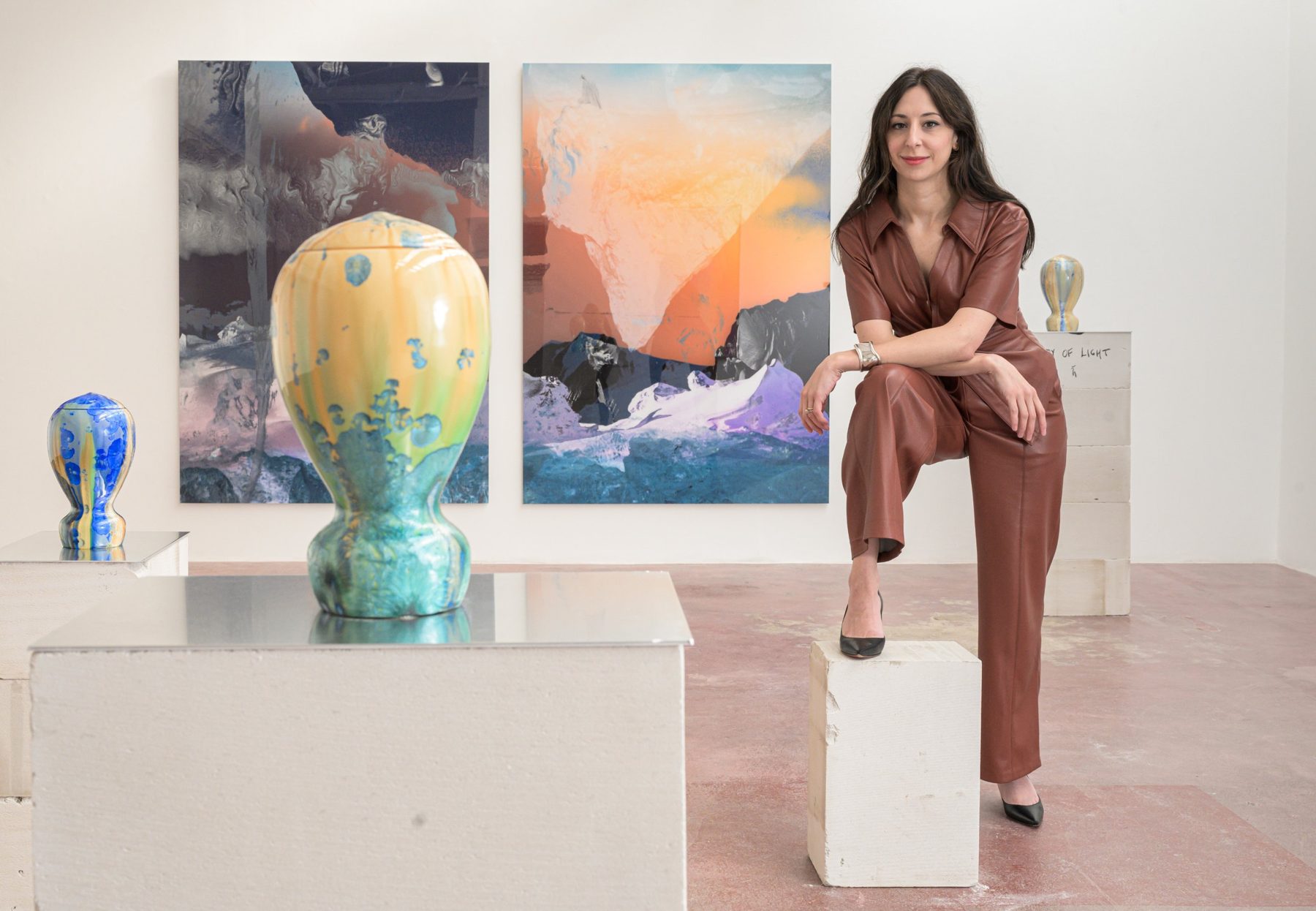
For me, art is a medium for transformation. A personal encounter with its depths taught me why integration matters. Today, I bring these insights into my work with people, exploring the relationship between consciousness and creativity as a fundamental part of what makes us human.
01Art as transformation
I have always understood art as more than an aesthetic pursuit. For me it has been a medium for transformation: a way of making the invisible visible. For much of my career I worked at the intersection of art, culture and human experience, guided by questions that reach beyond art itself. Why do we create? How do we make meaning? What shapes our perception of reality?
Working closely with artists, I was struck by how often they describe ideas and images as emerging through them rather than being consciously controlled. I came to see creativity as closely linked to altered states of consciousness, and to recognise that this openness carries both great value and real risk.
02A turning point
The most significant change in my own life came through Antifona, a project with artist Shezad Dawood and scientist Michael Moss for Colline ad Arte, the cultural initiative I established in Italy’s UNESCO-listed Prosecco Hills. Electrical signals from plants were translated into sound, inviting us to listen to nature in an unfamiliar way.
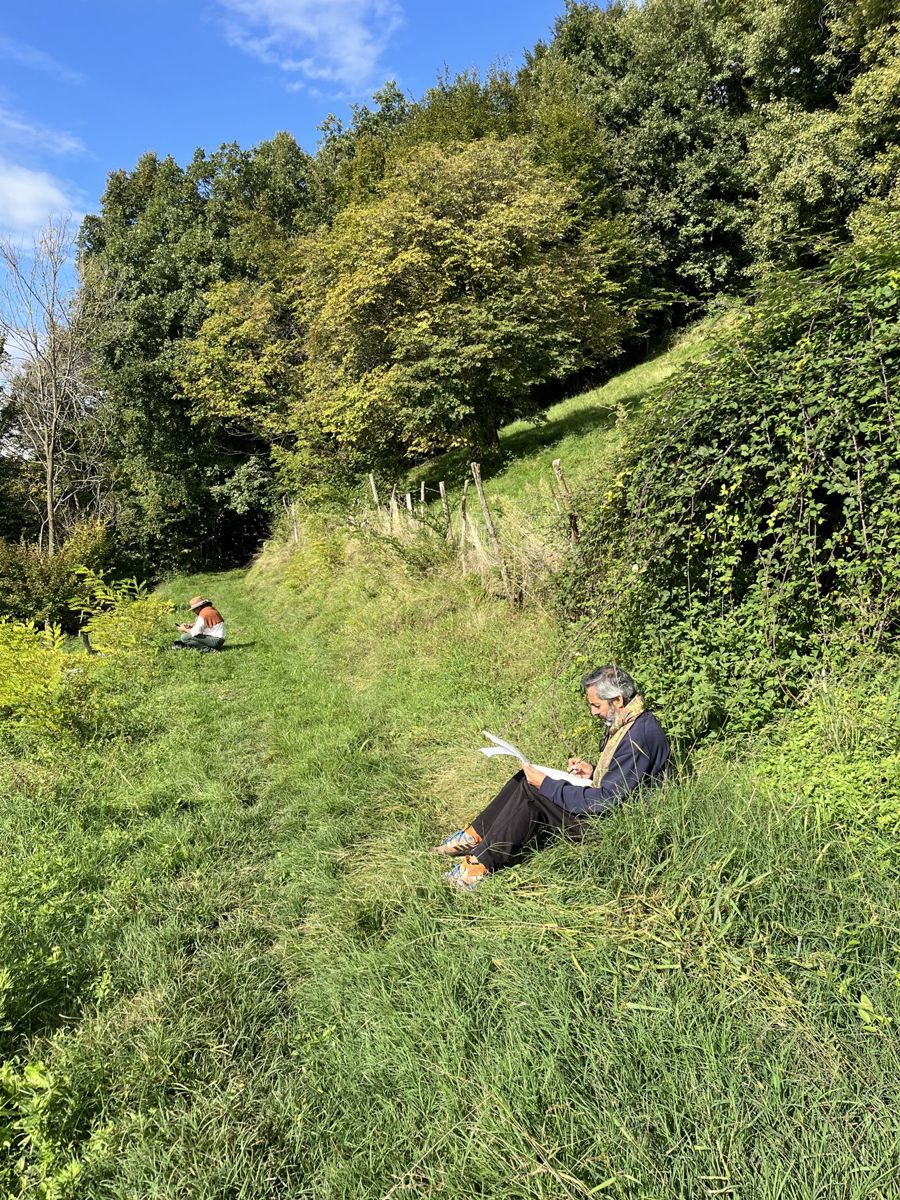
What began as an artistic investigation led me through a spiritual crisis: a period when my familiar ways of making sense of reality could no longer hold what I was experiencing. It changed how I understand the self, as fundamentally relational, shaped by other people, our bodies, our environments and the symbolic worlds we live in. It deepened my commitment to inquiry rather than certainty, and it changed the direction of my life.
I was working on ASTER at the time, the financial platform evolution of my artist management agency, Studio Expanded, thinking that the problem in the art world was financial sustainability. The experience of Antifona made me realise that what was missing was therapeutic integration. Working in the arts is a calling, and practitioners often get lost in it. I saw, and experienced myself, the abuse of the creative process, and a direct encounter with something that made me question what consciousness and creativity are pushed me towards therapeutic work, in search of how to support these experiences.
I am now learning and studying with different spiritual traditions, to understand how integration works in communities where creative openness is a required yet controlled state, such as in shamanism and Spiritualism.
03Why integration matters
For years I created experiences for others. I came to realise that what interested me most was what happened afterwards. How do we make sense of experiences that challenge who we think we are, and bring them into everyday life?
I have also seen the difficulties. Seeking repeated transcendence can become a way of avoiding ordinary life. Without preparation and support, intense experiences can be destabilising, and for some people they come with confusion or, more rarely, psychosis. They can also feed an inflated sense of identity rather than real self-understanding.
The value of transformation lies not only in our capacity to encounter the extraordinary, but in our ability to integrate it into ordinary life.
For me, integration means giving an experience its place within a whole life, while keeping agency, stability and a grounded sense of self. I am drawn to Jung’s idea of individuation: becoming more fully ourselves by developing a conscious, compassionate relationship with our contradictions, rather than treating ourselves as problems to be solved.
04My work today
These questions led me to counselling and hypnotherapy training, informed by depth psychology and Jungian and transpersonal perspectives. Today I offer integrative coaching, with hypnosis where it helps, alongside art and cultural projects, writing and research.
I am also twice exceptional (2e): gifted and neurodivergent. I know from my own life how intensity, sensitivity and a mind that works differently can be both a gift and a source of difficulty, and I work with people facing the same challenges.
What connects it all is creativity, which I see as a human technology for becoming whole: a way to make sense of experience, discover new possibilities and give shape to who we are becoming.
My journey has been as much about learning to stay grounded as about exploring the extraordinary. Where I once created experiences for others, I now want to help people make sense of their own.